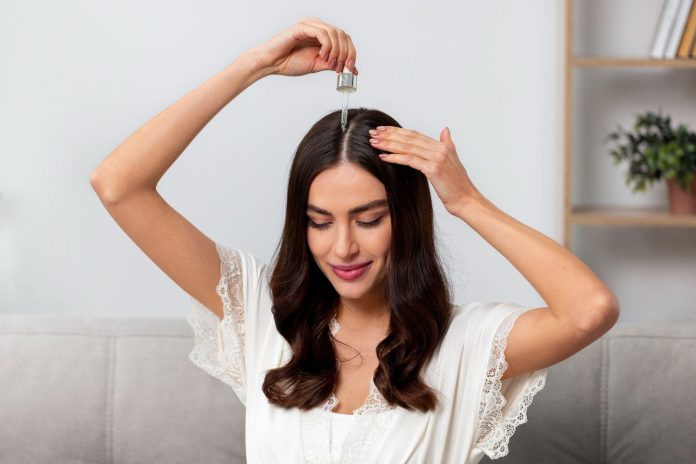
Losing hair is one of those things that starts slowly — a few extra strands on the pillow, a slightly wider parting — and then becomes impossible to ignore. For many people, that journey eventually leads to one name: minoxidil. Specifically, the 5% concentration that has become the most talked-about topical solution in hair loss treatment. But what does it actually do, how should it be used, and is it the right fit for everyone?
What Minoxidil Actually Does
Minoxidil was originally developed as an oral medication for high blood pressure. Researchers noticed that patients taking it were growing unexpected hair, which led to it being reformulated as a topical treatment for hair loss. Today it remains one of the few hair loss treatments with solid clinical backing.
The way it works is fairly straightforward. Minoxidil is a vasodilator, meaning it widens blood vessels. When applied to the scalp, it improves blood flow to the hair follicles and extends the anagen (growth) phase of the hair cycle. Hair follicles that have miniaturized over time — become smaller and weaker — get a better supply of oxygen and nutrients, which can help them function more normally again.
It does not block DHT, the hormone most responsible for genetic hair loss in men. That distinction matters for understanding its limitations.
Why 5% and Not 2%?
Minoxidil comes in two main concentrations: 2% and 5%. The 2% version was originally approved for women, while the 5% was approved for men. Over time, research showed the 5% concentration produces noticeably better results in terms of hair regrowth and slowing hair loss, even for women in certain cases under medical guidance.
The difference in effectiveness is not marginal. Studies comparing the two concentrations consistently show that 5% leads to greater hair count and density improvements. That said, higher concentration also means a slightly higher chance of side effects like scalp irritation or dryness, which is why starting with a proper application technique matters.
How to Use It Correctly
Application mistakes are one of the main reasons people feel minoxidil did not work for them. Getting it right is not complicated, but it does require consistency.
- Apply to a dry scalp, not wet or damp hair — moisture dilutes the solution and affects absorption
- Use the dropper or applicator to place it directly on thinning areas, not just pour it anywhere
- Gently spread it with fingertips across the targeted area
- Wash hands thoroughly after application to avoid accidental contact with other areas
- Allow it to dry completely (around 2–4 hours) before sleeping or applying other hair products
- Do not increase frequency thinking it will speed results — twice daily is the standard recommendation
Missing applications frequently will reduce effectiveness. The hair follicles need consistent stimulation to respond.
What Kind of Results Are Realistic
This is where many people set themselves up for disappointment. Minoxidil is not a fast solution. Most people see shedding in the first 4–8 weeks of use, which is actually a sign it’s working — old hairs are making way for new ones. This phase is temporary.
Visible regrowth typically begins around the 3–4 month mark. Meaningful improvements in density are usually seen at 6 months or beyond. Maximum results are generally evaluated at the 12-month point.
Results are most noticeable in people with recent hair thinning. Long-dormant follicles may not respond as well because the follicle structure may have degraded significantly over time.
One important point: if you stop using minoxidil, the hair it helped sustain will likely shed again within a few months. It requires ongoing use to maintain results.
Why Minoxidil Alone May Not Be Enough
For people dealing with pattern hair loss driven by hormones, genetics, or scalp health issues, topical minoxidil addresses circulation but does not touch the underlying triggers. That is why many specialists now recommend combining it with other interventions.
Some treatment approaches like Traya Minoxidil 5 are designed to fit within a broader hair loss protocol that looks at root causes alongside topical treatment — including hormonal balance, scalp health, and nutritional gaps.
Final Thoughts
Minoxidil 5% is a well-researched, effective tool for managing hair thinning and supporting regrowth. But it works best when used correctly, with realistic expectations, and ideally alongside an understanding of what is driving the hair loss in the first place. Treating a symptom consistently while ignoring the cause will only take you so far. The fuller picture always matters.