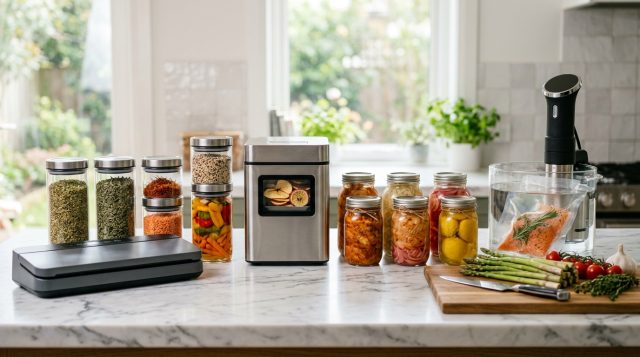
Long-term food preservation has evolved from a seasonal necessity into a deliberate lifestyle strategy. Whether reducing food waste, building emergency reserves, or simply enjoying summer produce in winter, mastering food preservation techniques is more relevant than ever in 2026. Modern kitchen technology now works alongside traditional methods — canning, drying, fermenting, and freezing — to deliver results that were once only possible in commercial settings. Understanding how these tools and techniques interact is the key to extending shelf life safely and efficiently. This guide walks through each phase of an optimized preservation setup, from choosing the right methods to avoiding costly mistakes.
1. Choosing the Right Methods of Food Preservation
The foundation of any successful preservation plan is selecting the appropriate method for each type of food. Not every technique suits every ingredient, and matching method to food type determines both safety and quality.
Canning, Fermenting, and Drying
Canning — whether pressure canning or water bath canning — remains one of the most reliable methods of food preservation for high-acid and low-acid foods alike. The water bath method works well for jams, pickles, and fruit-based products. A classic jam recipe typically relies on a combination of high sugar content and acidity to create a shelf-stable product, making it ideal for water bath processing.
Fermentation uses lactic acid produced by beneficial bacteria to preserve vegetables naturally. Lactic acid lowers the pH of foods like sauerkraut and kimchi, creating an environment hostile to harmful microorganisms. This process requires no specialized equipment beyond a clean vessel and salt.
Drying — through dehydrators, ovens, or sun-drying — removes moisture and prevents microbial growth. Herbs, fruits, and jerky all benefit from careful drying, and modern dehydrators offer precise temperature control that improves both safety and consistency.
Matching Technique to Food Type
- High-acid foods (tomatoes, fruits, pickles): water bath canning or drying
- Low-acid foods (vegetables, meats, beans): pressure canning or freezing
- Fermentable foods (cabbage, cucumbers, dairy): lactic acid fermentation
- Delicate herbs and thin produce: drying at low temperatures
2. Setting Up a Temperature-Controlled Storage System
Temperature is the single most important variable in food preservation. Improper storage temperatures accelerate spoilage even in correctly preserved foods.
Refrigeration as a Foundation
A well-calibrated refrigerator is central to any home food preservation setup. It bridges the gap between freshly preserved foods and those intended for long-term storage. For instance, opened jars of preserved foods, fermented vegetables in active culture, and fresh produce awaiting processing all require reliable cold temperatures. Investing in a quality Fridge with precise temperature zones and humidity controls prevents premature spoilage and maintains the integrity of preserved foods waiting to be used or finished.
Freezing for Extended Shelf Life
Freezing locks food at temperatures that halt microbial activity entirely. For home food preservation, a dedicated chest freezer set at or below 0°F (−18°C) significantly extends the life of blanched vegetables, portioned meats, and cooked preserved foods. Vacuum sealing before freezing prevents freezer burn and preserves both texture and flavor over periods of six months to two years.
3. Mastering Canning Techniques Safely
Canning is one of the most widely used food preservation techniques, but it also carries the highest risk if done incorrectly. Following established safety guidelines is non-negotiable.
Water Bath vs. Pressure Canning
The water bath method is appropriate only for high-acid foods with a pH below 4.6. This includes most fruit jams, jellies, pickles, and tomato products with added acid. For any jam recipe, the USDA recommends precise ratios of fruit, sugar, and pectin to ensure both gel consistency and safe acidity levels.
Pressure canning, on the other hand, reaches temperatures above 240°F (116°C), which is necessary to destroy Clostridium botulinum spores in low-acid preserved foods such as green beans, corn, and meat. The USDA canning website remains the authoritative resource for tested recipes and updated processing times, and food preservers should consult it before processing any new ingredient.
Equipment Calibration and Jar Integrity
Canning equipment must be checked before each season. Pressure canner gauges should be tested annually. Jar lids should never be reused for sealing. Rings, jars, and rubber seals should be inspected for chips, cracks, or warping that could compromise the seal and allow contamination.
4. Incorporating Drying and Dehydration into the Workflow
Drying is one of the oldest food preservation methods and remains among the most energy-efficient options available in 2026.
Using a Food Dehydrator
Modern dehydrators allow users to set precise temperatures between 95°F and 165°F (35°C–74°C), making it possible to dry delicate herbs at low heat while safely dehydrating meat at higher temperatures. Consistent airflow is critical — trays should be rotated and food should be evenly sliced to ensure uniform drying and prevent moisture pockets that lead to mold.
Oven Drying and Air Drying
When a dehydrator is unavailable, a standard oven set to its lowest temperature with the door slightly ajar can approximate dehydrator results. Air drying works well for herbs and certain peppers in dry climates. Regardless of the method, properly dried foods should be conditioned — stored loosely in a jar for one week and shaken daily — to detect and redistribute any remaining moisture before final sealing.
5. Fermentation as a Living Preservation Method
Unlike canning or drying, fermentation creates preserved foods that remain biologically active. This makes technique and monitoring especially important.
Setting Up a Fermentation Station
The fermentation process relies on an anaerobic environment, salt concentration, and ambient temperature. Vegetables submerged in a 2–3% salt brine will begin producing lactic acid within 24–72 hours as naturally occurring lactobacillus bacteria become dominant. The resulting lactic acid both preserves the food and contributes its characteristic tangy flavor.
Temperature management is critical: fermentation proceeds best between 65°F and 75°F (18°C–24°C). Too warm, and fermentation moves too quickly, producing soft textures. Too cold, and the process stalls. A stable kitchen corner away from direct sunlight works well for most fermented vegetables, while the refrigerator slows active fermentation once the desired flavor profile is reached.
Monitoring and Storage
Active ferments should be checked daily for proper submersion and signs of kahm yeast — a harmless but unappealing white film. Once fermentation is complete, jars should be transferred to cold storage. Fermented preserved foods kept below 40°F (4°C) can last several months with minimal quality loss.
6. Common Mistakes to Avoid in Home Food Preservation
Even experienced food preservers encounter avoidable errors. Awareness of these pitfalls protects both safety and effort.
- Skipping tested recipes: Improvising canning recipes without validated pH or processing times introduces serious safety risks. Always use recipes from established sources such as the USDA canning website or extension service publications.
- Under-processing canned goods: Insufficient processing time leaves harmful microorganisms alive. Use a timer and follow altitude adjustments precisely.
- Storing improperly sealed jars: Lids that flex or pop after canning have not sealed correctly. These jars must be reprocessed within 24 hours or refrigerated and used immediately.
- Drying food inconsistently: Uneven slicing or overloaded dehydrator trays creates moisture pockets that cause mold during storage.
- Ignoring refrigerator temperature drift: Refrigerators that run too warm compromise preserved foods waiting to be processed or consumed. A simple appliance thermometer reveals temperature inconsistencies.
- Over-salting ferments: Excess salt inhibits beneficial lactic acid bacteria, slowing or preventing proper fermentation. Follow established salt-to-vegetable ratios.
- Not labeling preserved foods: Without dates and contents on every jar or package, rotation becomes impossible, and foods are frequently forgotten past their optimal quality window.
Practical Checklist for Long-Term Food Preservation in 2026
Before starting any preservation project, work through this action checklist to ensure safety, quality, and efficiency:
- Identify the food type and select the appropriate preservation method (canning, drying, freezing, or fermentation).
- Consult a tested recipe source — such as the USDA canning website — for validated processing times and ingredient ratios.
- Inspect and calibrate all equipment: pressure canner gauge, jar seals, dehydrator thermostats, and refrigerator temperature.
- Verify that refrigerator and freezer temperatures are within safe ranges before storing any preserved foods.
- Prepare ingredients consistently: uniform slicing for drying, proper acid levels for canning, correct salt ratios for fermentation.
- Process and seal foods according to tested times and methods — never shorten steps.
- Check seals within 24 hours of canning; reprocess or refrigerate any failures immediately.
- Label every jar and package with the contents, preservation method, and date.
- Condition dried foods in loose jars for one week before final sealing to detect residual moisture.
- Rotate stock regularly — oldest preserved foods go to the front, newest to the back.
- Store fermented foods in cold conditions once the desired flavor is achieved to slow active fermentation.
- Review and update the preservation plan seasonally based on what worked, what failed, and what new produce is available.