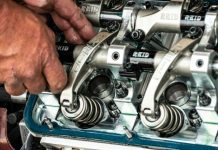
The V6 engine is a survivor. It witnessed the rise of the V8. It outlasted the straight-six in many cars. Now it faces its biggest challenge yet. The march toward electrification is relentless. Yet, the modern V6 is not fading away. It is evolving. Its current design is a fascinating snapshot. It reveals where automotive technology has been. It also shows us where it is going. Studying today’s V6 is like reading a history book and a future forecast at the same time.
The Efficiency Imperative
Raw horsepower is no longer the only goal. Efficiency is king. Modern V6 engines showcase this shift perfectly. They use every trick in the book. Direct fuel injection is now standard. It allows for more precise combustion. Twin-scroll turbochargers are common. They eliminate lag and boost low-end power. Advanced variable valve timing adjusts everything on the fly. These technologies squeeze more power from less fuel. A specific engine illustrates this evolution well. The General Motors 3.6 liter engine incorporated many of these features. Its design reflected a decade of focus on refinement and efficiency. It served as a bridge between older, simpler designs and the high-tech present.
The Downsizing Trend in Action
There is a clear industry pattern. Engineers replace a large V8 with a smaller, turbocharged V6. The new engine often makes similar power. It always uses less fuel. The modern V6 is the poster child for this “right-sizing” movement. Its compact size is an advantage. It allows for better vehicle packaging. This helps with aerodynamics and interior space. The V6 proves you do not need huge displacement for strong performance. Smart engineering and forced induction are the new recipe.
Hybridization as a Natural Partner
The V6 is not fighting the electric future. It is joining it. Many of the most powerful hybrid systems today use a V6. The engine acts as a generator or a direct power source. Its smoothness and compact size make it ideal for this role. The V6 provides long-range capability. The electric motors deliver instant torque. This partnership extends the life of the internal combustion engine. It also creates spectacular performance. The modern V6 is designed with this hybrid compatibility in mind from the start.
The Materials Revolution
Open the hood of a new car with a V6. You will see advanced materials everywhere. The engine block might be aluminum. The intake manifold could be a composite plastic. Stronger, lighter steels are used for components. This focus on weight reduction is critical. Every pound saved improves efficiency and handling. The modern V6 is a showcase for metallurgy and material science. It is lighter and stronger than its ancestors. This reflects the industry’s relentless pursuit of mass reduction.
Thermal Management Mastery
Waste heat is the enemy of efficiency. Modern V6 engines are masters of thermal management. They have complex cooling systems. These systems warm the engine up quickly. They also keep it at a perfect temperature during hard use. Some engines even have integrated exhaust manifolds. This design uses heat more effectively. It improves turbocharger response. This focus on controlling heat is a quiet revolution. It unlocks more power and better fuel economy from the same basic design.
The Software-Defined Engine
The most important component is not metal. It is code. Today’s V6 is a software platform. Its behavior is dictated by millions of lines of programming. The computer controls fuel injection timing. It manages the turbocharger’s boost. It decides when to activate the hybrid system. This software layer allows for constant optimization. It can even be updated over the air. The physical engine is just the hardware. The software is the brain. This shift is perhaps the most significant evolution of all.
A Testament to Adaptability
The V6’s story is one of pure adaptation. It refused to become obsolete. It absorbed new technologies like direct injection and turbocharging. It embraced its role in hybrid powertrains. It shed weight through new materials. It became smarter with advanced software. The modern V6 is a Swiss Army knife of propulsion. It is a testament to incremental, relentless improvement. It proves that established ideas can have a long and brilliant future. You just have to be willing to evolve.

The Bridge to Tomorrow
So, what does today’s V6 reveal? It shows us a technology in transition. It is not the endpoint. It is a highly refined waypoint. It demonstrates the industry’s priorities: efficiency, integration, and intelligence. The lessons learned here are already being applied. They are shaping the next generation of electric motors and battery systems. The modern V6 is a teacher. Its evolution gives us a clear picture of automotive progress. The journey is far from over. The V6 is helping to build the bridge to whatever comes next.